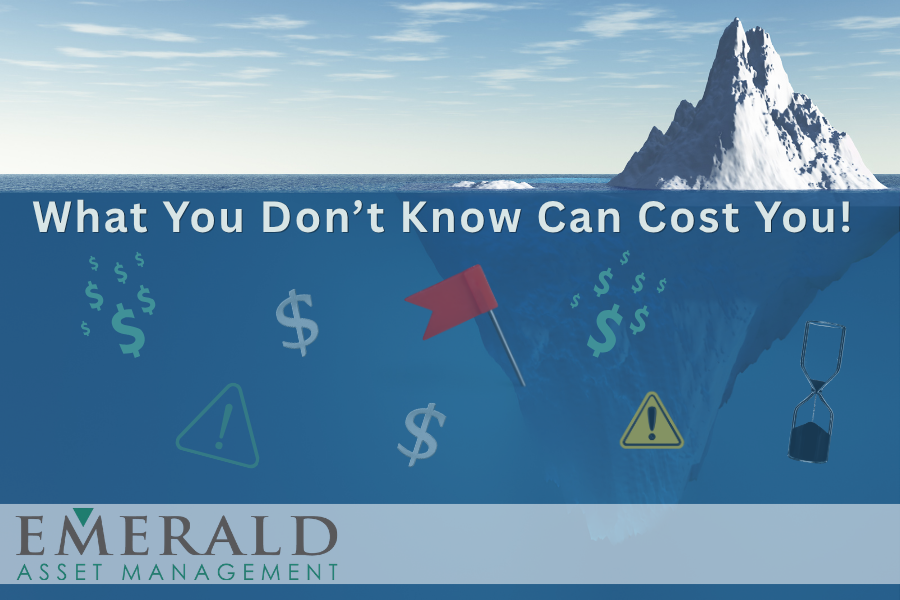
What You Don’t Know Can Cost You
Most investors know the fundamentals. Save regularly. Stay invested. Spread your risk. Hold a blend of stocks and bonds. Keep your costs in check and resist the urge to react when markets get noisy.
Those habits matter. More often than not, they are the bedrock of a sound long-term plan.
But there comes a point for many investors when doing the fundamentals well is simply no longer enough.
As wealth builds, the field of play widens. New structures come within reach. Taxes start to carry more weight. Strategies that once felt beside the point suddenly warrant a closer look. And yet a surprising number of investors never pursue any of it, for one simple reason: no one ever told them it existed.
After years in this business, I have come to believe that one of the clearest dividing lines between people who build wealth and people who keep it is awareness. The investors who do best are seldom the ones chasing the next hot stock or trying to outguess move. They are usually the ones who understand the full menu of choices in front of them and can decide, with clear eyes, which of those choices is worth their attention.
Too often, that conversation never happens.
For decades, the industry has run on a familiar script. An investor sits down with an advisor, fills out a risk questionnaire, and walks away with a diversified mix of mutual funds and ETFs. There is nothing wrong with that. Diversification is still one of the most powerful ideas in all of investing.
But a diversified portfolio ought to be where the conversation begins not where it ends.
Plenty of investors are caught off guard when they learn there were other strategies on the table that never came up. Some are about investments. Some are about taxes. Some touch retirement planning, others wealth preservation or managing risk. The right answer is different for everyone. What stays the same is this: you cannot weigh an option you never knew you had.
Take the affluent investor who knows public stocks, bonds, mutual funds, and ETFs cold but has never once looked at alternatives private credit, private real estate, interval funds, or other vehicles open to certain qualified investors. That does not make any of those choices automatically better. Many are more complicated, harder to sell in a hurry, and come with risks of their own. But they earn a place in the discussion when you are sizing up the whole landscape.
Taxes tell the same story. Some investors spend thirty years building assets and never stop to ask whether a Roth conversion might make sense in a given year. Others fixate on returns while missing chances to keep more of what they earn through smarter portfolio construction and withdrawal planning. Small decisions, repeated year after year, add up to real money.
What I find most striking is that the thing holding people back is usually not their wealth.
It is awareness.
Time and again over my career, I have sat across from investors who clearly qualified for a particular solution or planning strategy and had never even heard it mentioned. They assumed it was reserved for institutions, ultra-wealthy families, or people with far more than they had managed to put together.
More often than not, they assumed wrong.
Part of the problem is structural. A lot of advice is delivered through large organizations that lean, by necessity, on standardized processes. That can be a fine way to serve a lot of clients the same way. But standardized is not the same as tailored.
And the wealthier you become, the more your situation tends to be one of a kind. A business owner selling a company is playing a different game than an executive nearing retirement. A retiree living off portfolio income carries different worries than an entrepreneur still stacking up assets. A family sitting on a concentrated position in a single stock needs a very different conversation than someone investing strictly through retirement accounts.
The truth is that successful investing gets more personal as the stakes get higher.
This is one of the reasons independence matters.
An independent firm is not boxed in by a preset menu or a one-size-fits-all playbook. Independence gives an advisor room to weigh a wider range of possibilities and judge, honestly, whether any of them fit the person sitting in the chair.
Sometimes the answer is a simple portfolio of low-cost ETFs.
Sometimes it is a separately managed account.
Sometimes it means taking a hard look at alternatives.
Sometimes it means spotting a tax consideration that changes an investment decision.
And sometimes it means concluding that nothing needs to change at all.
The value is not in complexity for its own sake. The value is in having the freedom to consider everything on the table before landing on a recommendation.
At Emerald Asset Management, we believe investment management belongs at the heart of the client relationship. Building portfolios, managing risk, and helping clients pursue their goals will always be our first job.
But we also believe investors deserve more than something off the rack.
They deserve an advisor who knows the landscape, recognizes an opportunity when it appears, and is willing to weigh solutions based on what actually serves the client not on whatever happens to fit inside a predetermined box.
The most successful investors are not the ones with access to the most products.
They are the ones who know which opportunities are worth pursuing, which distractions to tune out, and which decisions give them the best odds of getting where they want to go.
In investing, knowledge alone will not carry you.
But an opportunity you never knew existed is one you can never act on.
And that may be the most expensive price an investor ever pays.
This should not be construed as tax advice. You should always consult with your tax professional with regard to specific tax questions and obligations.
The opinions expressed are those of the Emerald Asset Management Investment Team. The opinions referenced are as of the date of publication and are subject to change without notice. This material is for informational use only and should not be considered investment advice.